



- 2A Andrea Papandreou & Doukissis Plakentias
151 27 Melissia - 2nd Floor
- Phone: 210 8104121
- melissia@angelakisd.gr
What is dental occlusion?
Occlusion refers to the way the teeth of the upper and lower jaws come into contact when the mouth is closed. It does not involve only the teeth, but the entire stomatognathic system:
the jaws, facial muscles, and the temporomandibular joints (TMJ), which allow movement of the lower jaw.
When occlusion is correct, the teeth work in harmony and chewing is smooth, effortless, and without strain.
What is centric occlusion?
The lower jaw can move into different positions during chewing.
The position in which most teeth make proper contact when the mouth is closed is called improper occlusion..
This is the most important position for proper chewing function.
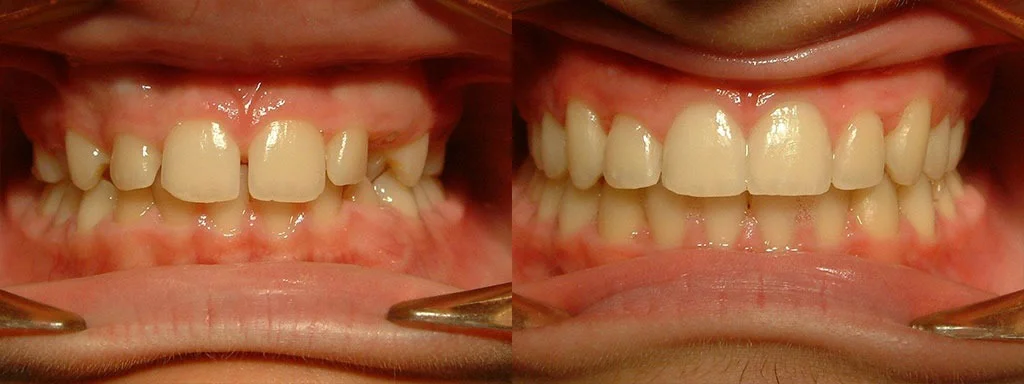
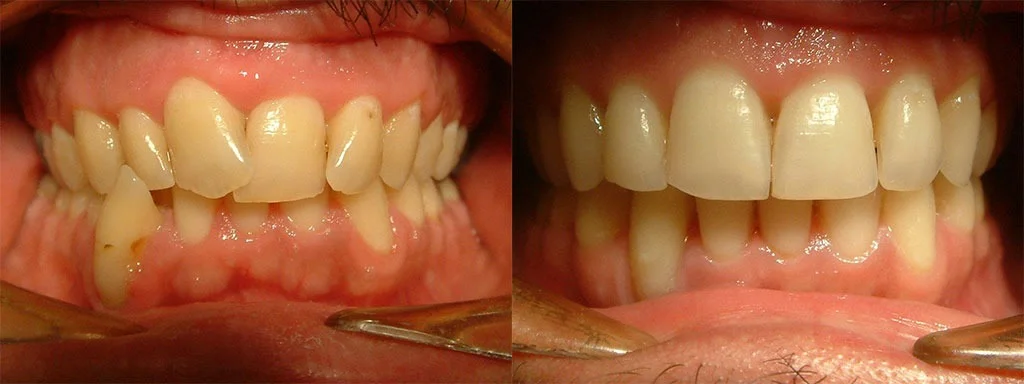
When there is no balanced contact between all teeth, we refer to it as an improper occlusion.
This may be caused by:
- Crooked, missing, or crowded teeth
- Incorrect jaw position
- Fillings or prosthetic restorations that do not fit properly
What are occlusal anomalies?
An occlusal anomaly occurs when the teeth or jaws do not fit together correctly.
It may involve only the position of the teeth or also the relationship between the jaws.
A common example is crossbite,where some upper teeth bite inside the lower teeth. Normally, the upper teeth should slightly overlap the lower teeth. This can occur:
- in the front of the mouth
- or in the back teeth
Main classes of malocclusion
Class I:
The jaws are in a normal relationship, but the teeth are crowded, spaced, or misaligned.
Class II:
The upper teeth or upper jaw (or both) are positioned forward compared to the lower jaw.
Class III:
The lower teeth or lower jaw (or both) are positioned forward compared to the upper jaw.
Possible consequences
Poor occlusion is not only an aesthetic issue. It can cause:
- Difficulty in chewing
- Increased wear or fracture of teeth and fillings
- Strain on jaw muscles and joints
- Headaches or facial pain
When crooked teeth are also present:
- Oral hygiene becomes more difficult
- Risk of tooth decay and gum disease increases
- Smile aesthetics are affected
Why correcting occlusion is important
Orthodontic treatment aims to properly position the teeth and jaws so that:
- Chewing functions normally
- Teeth and joints are protected
- Oral health is maintained long-term
- A harmonious, balanced, and attractive smile is achieved