



- 2A Andrea Papandreou & Doukissis Plakentias
151 27 Melissia - 2nd Floor
- Phone: 210 8104121
- melissia@angelakisd.gr
What is dental crowding?
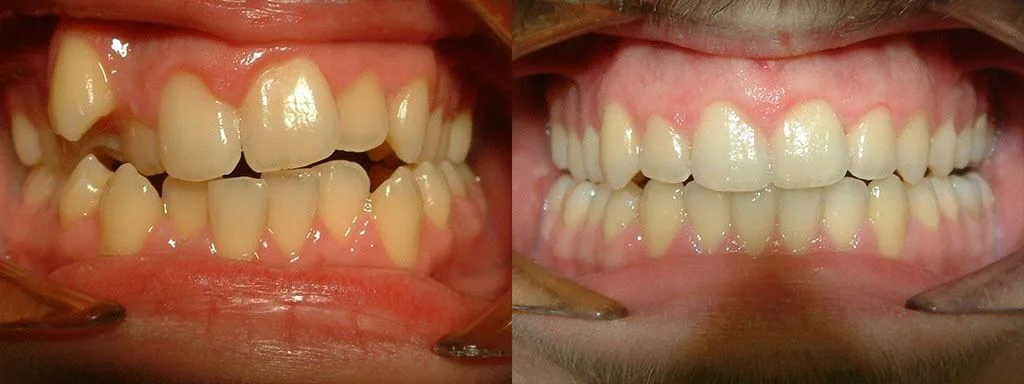
Crowding is the most common orthodontic irregularity and occurs when there is not enough space in the jaw for all teeth to be properly aligned. It is usually caused by a mismatch between tooth size and available jaw space, resulting in teeth that appear crooked, overlapping, or positioned outside their normal alignment.
Επιπτώσεις του συνωστισμού
Effects of crowding
- Makes proper oral hygiene more difficult
- Promotes plaque accumulation
- Increases the risk of tooth decay and gingivitis
- May affect bite alignment and chewing function
In more severe cases, the condition may worsen over time.
What is spacing (diastema)?
Spacing is the opposite condition of crowding. It occurs when there is more space than normal in the jaw, resulting in gaps between the teeth.
It can be:
- Localized, when it affects specific teeth
- Generalized, when it affects the entire dental arch
Causes of spacing
The most common cause is a mismatch between tooth size and jaw size, meaning the teeth are smaller than the available space.
Other possible causes include:
- Congenital absence of teeth
- Impacted teeth that fail to erupt
- Tooth loss without replacement
Treatment
Orthodontic treatment aims to correctly align the teeth and close all existing spaces, restoring balance in the dental arch in order to:
- Improve oral hygiene
- Enhance chewing function
- Protect the health of teeth and gums
- Achieve a harmonious aesthetic result
Treatment is individually planned according to the age and needs of each patient and may include clear aligners or other orthodontic methods. In cases where orthodontic treatment cannot fully close all gaps, aesthetic dentistry may be used to complete the restoration.