
Invisalign First
Orthodontics for Children with Clear Aligners
Book Now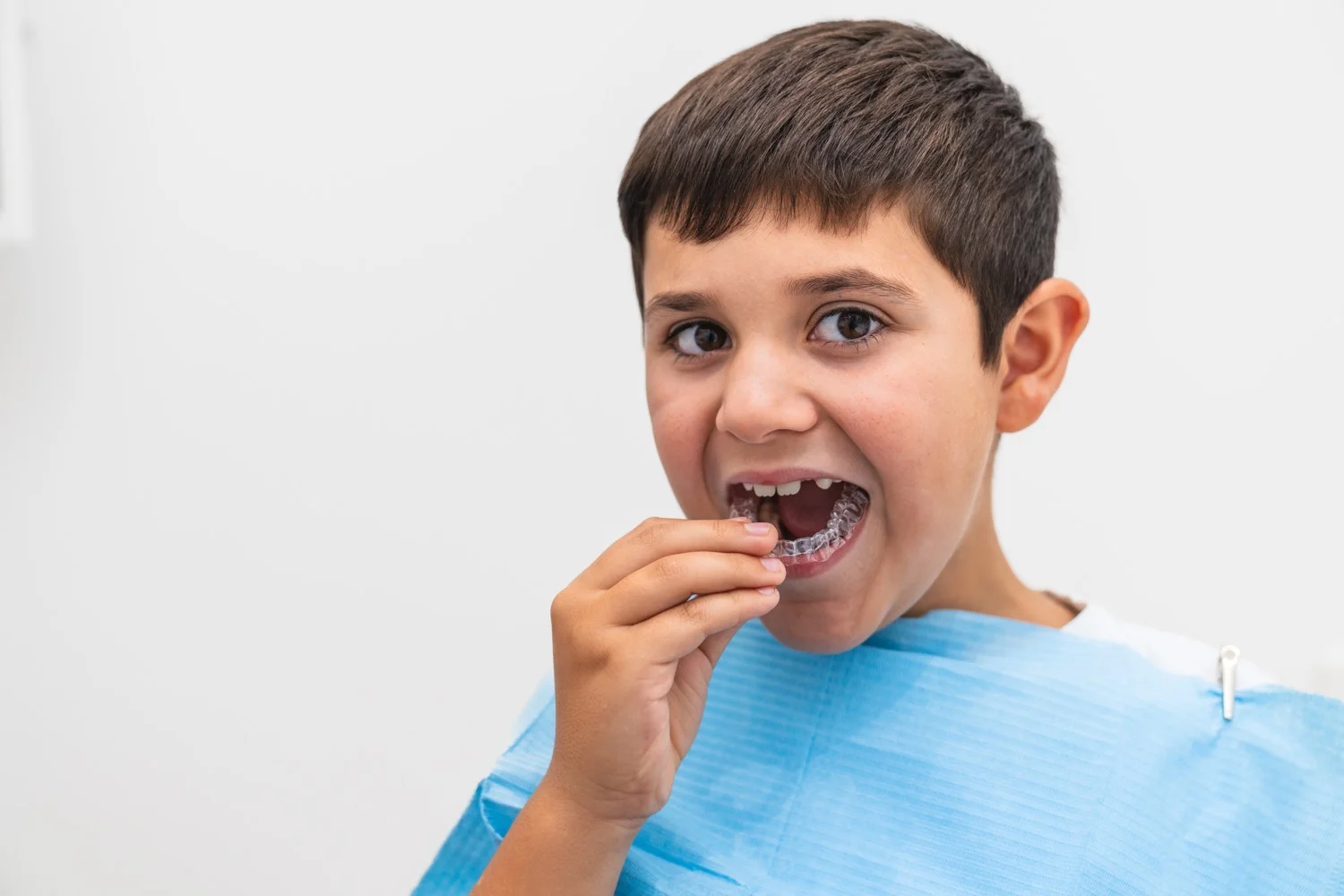
Childhood, particularly between the ages of 7 and 10, is an important period for the development of the teeth and jaws. As the first permanent teeth emerge, an orthodontic assessment can identify problems early in tooth position, the bite and the formation of the dental arches.
Invisalign First is a specialised treatment option using clear, removable aligners, designed for children in the mixed dentition phase. It aims to address specific orthodontic problems according to the child’s needs and stage of development.
Benefits of Treatment
- Supporting orthodontic development
- Improving tooth position and the bite
- Discreet treatment without metal braces
- Easier daily oral hygiene
IS IT RIGHT FOR YOUR CHILD?
The First Step Is an Orthodontic Assessment
Age alone does not determine whether a child needs Invisalign First treatment. Tooth position, the bite, jaw development and the stage of dental development must be assessed together.
A visit to the orthodontist helps establish whether early intervention is needed and which treatment approach best meets the child’s needs.
Book an orthodontic assessment to receive reliable information about the available options.
Book NowCHILDREN’S ORTHODONTICS
Treatment in Practice
Orthodontic Assessment
The orthodontist examines tooth position, the bite and jaw development, taking into account the child’s age and stage of dental development.
Digital Scanning
An intraoral 3D scanner records the position of the teeth without the need for conventional impression material. The diagnostic information required for treatment planning is also collected.
Personalised Planning
A digital treatment plan is created around the child’s orthodontic needs. Planning takes into account mixed dentition, the anticipated tooth movements and the treatment goals.
Starting Treatment
The child receives their personalised aligners and instructions on how to insert, remove and care for them correctly.
Monitoring Progress
Treatment is reviewed regularly to assess aligner fit and tooth movements. Where necessary, the treatment plan is adjusted according to the clinical findings and the child’s growth.
Reassessment of Dental Development
After this phase of treatment is completed, monitoring continues as the permanent teeth emerge and the jaws develop. Depending on progress, the orthodontist determines whether further treatment is needed.
PERSONALISED TREATMENT
Designed for a Growing Smile
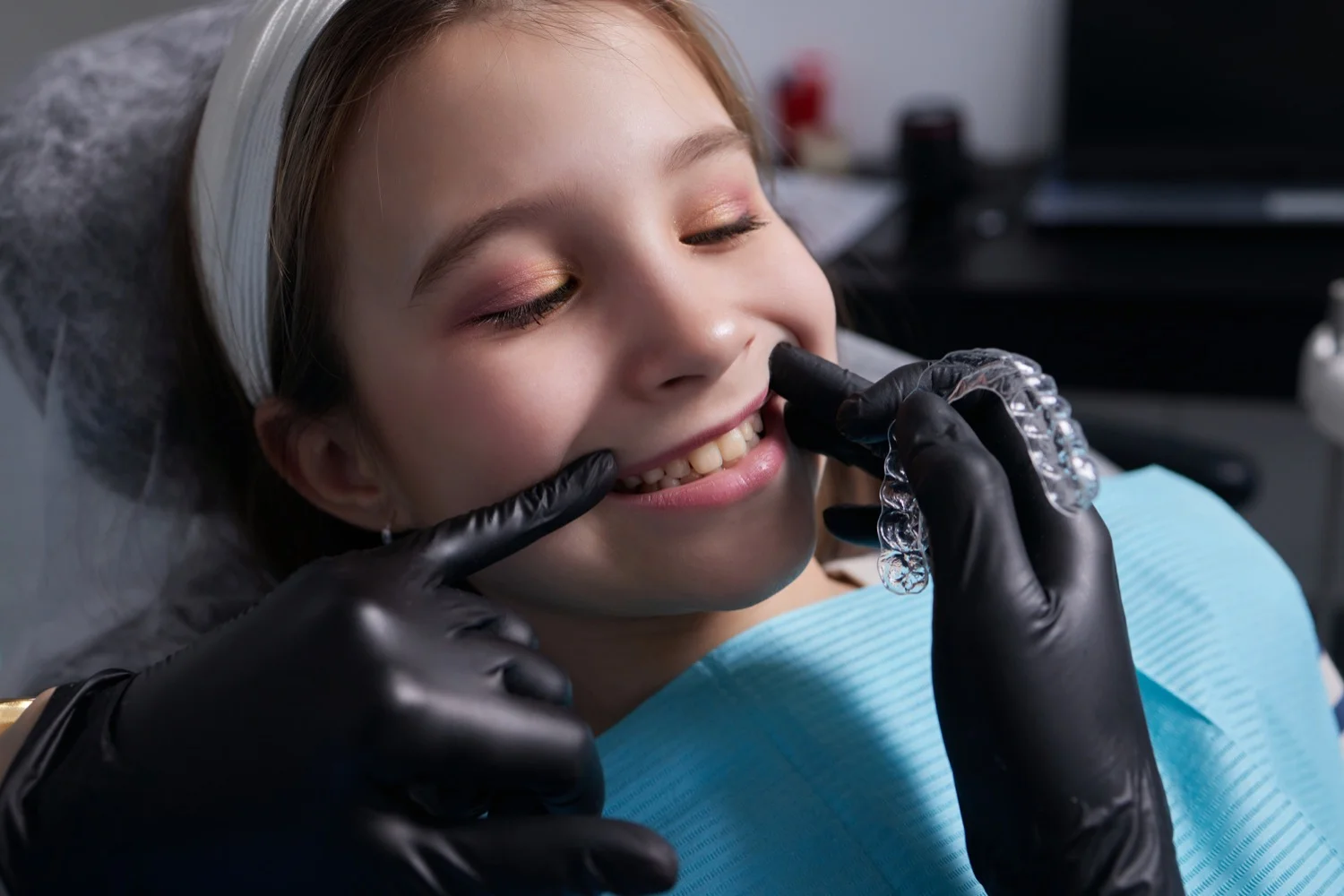
Every child develops at their own pace. Invisalign First treatment therefore follows an individual plan adapted to the characteristics of their developing teeth and the needs of each young patient.
Digital Treatment Planning
A 3D digital scan records tooth position in detail and supports planning of the anticipated movements. Through digital simulation, the orthodontist can evaluate each stage of the treatment plan and explain the goals of treatment to parents.
Digital simulation is a planning tool, not a guarantee of the final result. The actual course of treatment is assessed clinically and monitored by the orthodontist.
THE ADVANTAGES
Comfort and Flexibility in Your Child’s Daily Life
Orthodontic treatment should fit as smoothly as possible into a child’s everyday life. Clear aligners offer an alternative approach with an emphasis on discretion and ease of use.
Discreet Appearance
Clear aligners are less noticeable than metal braces, allowing children to smile and take part in their daily activities without visible metal components.
Freedom with Food
Aligners are removed during meals, following the orthodontist’s instructions. This means they do not involve the same dietary restrictions associated with fixed braces.
Easier Oral Hygiene
Being removable makes brushing and flossing easier. It is also important for the child to maintain consistent oral hygiene habits throughout treatment.
No Metal Components
Aligners do not have the metal brackets and wires used in conventional fixed appliances. Their suitability is assessed individually, as every orthodontic appliance has its own characteristics.
Monitoring Growth and Development
Treatment includes regular orthodontic reviews to assess both the progress of tooth movements and the development of mixed dentition.
CLINICAL EXPERIENCE
The Right Treatment Starts with the Right Diagnosis
In children’s orthodontics, choosing the appropriate treatment involves more than aligning the teeth. It requires assessment of the bite, jaw development and the eruption of permanent teeth to establish each child’s actual needs.
With 27 years of experience and more than 4,000 completed cases, orthodontist Dimosthenis Angelakis takes an individual approach to each case, guided by function, aesthetics and the long-term health of the smile.